 how-to
How to Maintain Youthful Skin Naturally: 7 Daily Steps
Table of Contents
- Start With Sun Protection and Limiting UV Exposure
- Build a Natural Skin Care Routine for Aging Skin
- How to Prevent Premature Skin Aging Beyond the Basics
- Eat Foods for Healthy Skin
- Daily Habits for Youthful Skin: Sleep, Stress, and Hydration
- Avoid Tanning, Smoking, and Other Habits That Age Skin
- What Natural Approaches Can and Cannot Do for Youthful Skin
- When to See a Professional About Aging Skin
- Frequently Asked Questions
Last Updated: October 21, 2026
Start With Sun Protection and Limiting UV Exposure
Sun protection is the single most effective step for how to maintain youthful skin naturally. UV exposure breaks down collagen and elastin, the fibers that keep skin firm, and it drives most fine lines, age spots, and dark spots.
Nothing else in your routine comes close. Sunscreen is the anti-aging product. Everything else supports it.
The American Academy of Dermatology's sun protection guidance recommends broad-spectrum sunscreen with SPF 30 or higher, reapplied every two hours outdoors. That single habit protects skin texture and elasticity better than most creams on the market.
How to Choose and Apply Sunscreen
Choose a broad-spectrum formula with SPF 30 or higher, then apply it generously every morning, indoors or out. Most people use far too little, which drops real protection well below the label.
- Use about one shot glass of lotion for the face and neck
- Apply 15 minutes before heading outside
- Reapply every two hours, and after swimming or sweating
- Pick a formula you actually like, or you will skip it
Build a Natural Skin Care Routine for Aging Skin
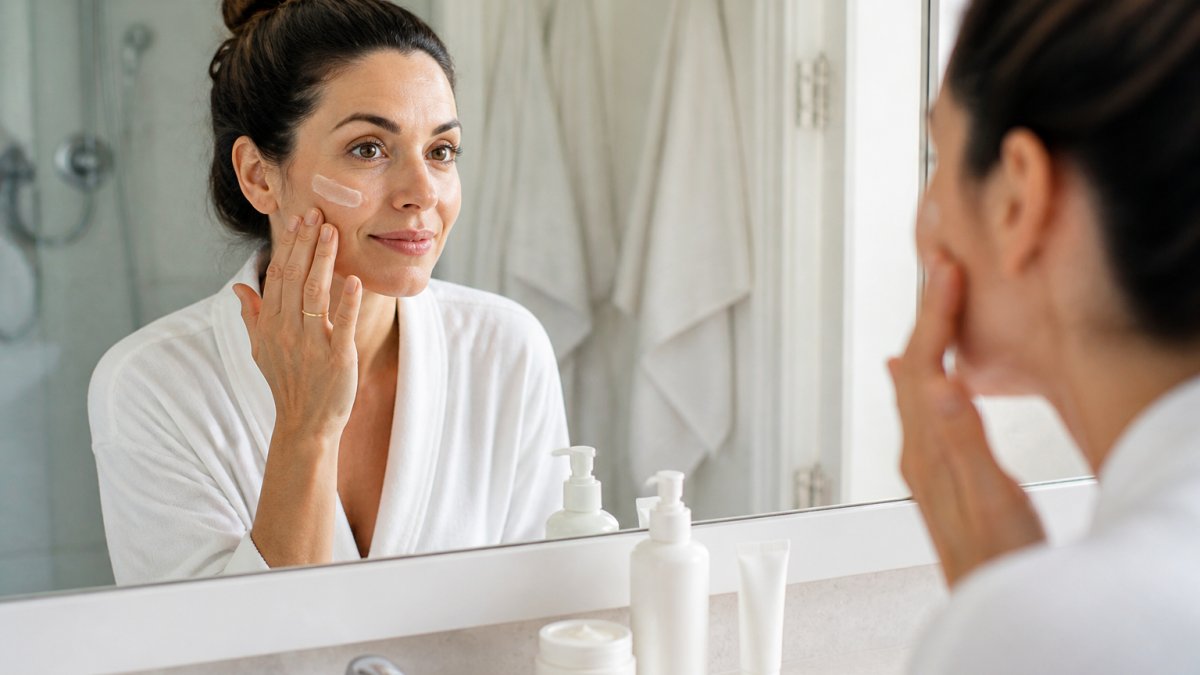
A natural skin care routine for aging skin needs only three steps in the morning and three at night. Gentle cleansing, moisturizing, and sun protection do most of the work. Everything else is optional.
The goal is a healthy skin barrier. A damaged barrier means dry skin, skin irritation, and faster visible aging. Simple beats complicated here.
A Morning and Evening Routine by Skin Type
Match your routine to your skin type, and keep it short enough to repeat every day.
| Skin Type | Morning | Evening | Watch For |
|---|---|---|---|
| Dry skin | Cream cleanser, rich moisturizer, SPF | Gentle cleanse, hydrating serum, thicker moisturizer | Tightness after washing |
| Oily skin | Foaming cleanser, light gel moisturizer, SPF | Gentle cleanse, oil-free moisturizer | Over-washing that triggers more oil |
| Combination | Mild cleanser, lotion, SPF | Cleanse, moisturizer on dry areas | Skipping moisturizer on the T-zone |
| Sensitive | Fragrance-free cleanser, barrier cream, SPF | Fragrance-free cleanse, soothing moisturizer | Stinging, redness, new products |
How to Introduce New Products Without Irritating Skin
Most irritation from natural skin care comes from adding too much, too fast. A common pattern among dermatology practices is to introduce one new product at a time and wait one to two weeks before adding another, so you can tell what caused a reaction if one appears.
- Patch test first. Apply a small amount to the inner forearm or behind the ear and wait 24 to 48 hours before using it on your face.
- Start with frequency, not strength. Use a new active every other day or twice a week before moving to daily use.
- Do not stack irritants. Avoid combining strong acids, retinoids, and physical scrubs in the same week, especially when you are new to any of them.
- Read the label for fragrance and alcohol. Fragrance-free and alcohol-free formulas are usually the safer starting point for sensitive skin.
- Keep a simple baseline. A gentle cleanser, a moisturizer, and sunscreen are the routine you fall back on when your skin reacts.
Adjusting the Routine as Skin Changes
Skin needs shift with seasons, stress, and age. In winter or low humidity, a richer moisturizer and a gentler cleanser often help. In summer, a lighter lotion and more consistent sunscreen reapplication matter more. If your skin becomes persistently dry, oily, or irritated despite a stable routine, that is a signal to simplify back to the three basics before adding anything new.
How to Prevent Premature Skin Aging Beyond the Basics
Preventing premature skin aging comes down to consistency, not intensity. A short routine done daily outperforms an elaborate one done twice a week.
Sleep on your back when you can. Repeated pressure on one side of the face deepens creases over time. Facial expressions also leave their mark, though you cannot and should not stop smiling.
Do not smoke, and limit alcohol. Both affect skin appearance and skin hydration from the inside. We cover the habits side in detail below.
Eat Foods for Healthy Skin
Foods for healthy skin support the skin from within. A balanced diet with fruits, vegetables, whole grains, and lean protein gives skin the building blocks it needs. No single food reverses wrinkles.
Vitamin C supports collagen production. Find it in citrus, peppers, and berries. Dietary fats, including those in nuts, seeds, and olive oil, help skin hold moisture.
- Fruits and vegetables: color on the plate usually means more nutrients
- Whole grains: steady energy and fiber
- Lean protein: supports skin repair
- Water intake: sip through the day rather than gulping at once (Source: National Institutes of Health's information on antioxidants)
What most guides miss is that crash dieting shows up on your face. Rapid weight loss reduces facial volume, which can make aging skin look more hollow.
Daily Habits for Youthful Skin: Sleep, Stress, and Hydration
Daily habits for youthful skin matter as much as any product. Sleep, stress, and water intake all show on your face before they show anywhere else.
Poor sleep contributes to under-eye bags and dull skin texture. Chronic stress is linked to skin irritation and slower healing. Aim for seven to nine hours and build one wind-down habit that actually works for you.
Hydration helps skin hydration, but drinking extra water will not erase dry skin. Pair water intake with a good moisturizer. Together they do more than either alone.
Avoid Tanning, Smoking, and Other Habits That Age Skin
Skip tanning beds and intentional tanning entirely. UV exposure from tanning damages skin the same way sun exposure does, and it accelerates wrinkles, age spots, and dark spots.
Smoking and tobacco narrow blood vessels and reduce oxygen to skin. Smokers often notice a dull, grayish tone and deeper lines around the mouth. Quitting is the highest-return skin decision a smoker can make.
If you want a glow without UV, use a self-tanner. It gives color without the damage, and modern formulas are far easier to apply evenly than older ones.
What Natural Approaches Can and Cannot Do for Youthful Skin
Natural approaches can protect skin, improve hydration, and slow visible aging. They cannot erase deep wrinkles, restore lost volume, or reverse sun damage already done.
Be skeptical of big promises. No cream removes decades of UV exposure, and no diet plan replaces professional care. What natural habits do well is keep healthy skin healthy.
This is where realistic expectations matter. Start early, stay consistent, and treat natural care as prevention. Then use professional help for what prevention cannot fix.
When to See a Professional About Aging Skin
See a professional when at-home care stops delivering results or when skin changes concern you. Persistent irritation, changing moles, or sudden dryness deserve a medical look first.
Most natural skin care advice stops at "see a doctor if worried," which leaves readers unsure what actually warrants a visit. A clearer rule: seek evaluation for changes that are new, persistent, or evolving, rather than for ordinary signs of aging.
Signs That Warrant a Professional Evaluation
- A mole or spot that changes in size, shape, color, or texture, or that bleeds or itches
- Persistent redness, scaling, or irritation that does not improve with a gentle routine
- Sudden or severe dryness, oiliness, or breakouts in skin that was previously stable
- A sore that does not heal within a few weeks
- Rapid changes in skin texture or color over a short period
These signs are not a diagnosis. They are reasons to have a qualified professional look, because some skin conditions mimic ordinary aging and are easier to manage when caught early.
What a Professional Evaluation Typically Involves
A first visit usually starts with a history of your routine, products, sun exposure, and any medications, followed by a visual skin exam. Depending on what is found, a professional may recommend a biopsy, patch testing, or a treatment plan. For fine lines and wrinkles that no longer respond to a good routine, medical-grade skin care and professional treatments can go further than over-the-counter products.
How to Prepare for the Visit
- Bring a list of every product you use, including cleansers, moisturizers, and sunscreen
- Note when the concern started and whether anything makes it better or worse
- Mention any history of skin cancer, eczema, rosacea, or sensitive skin
- Ask what results are realistic and what the recovery or adjustment period looks like
We build personalized wellness plans around your skin, your goals, and your schedule. Our approach combines medical-grade products with treatments aimed at aging gracefully at a cellular level.
A consultation is the right first step. It gives you an honest read on what your skin needs and what results are realistic, without guesswork.
Frequently Asked Questions
How can I maintain youthful skin naturally?
Focus on consistency over expensive products. Wear broad-spectrum sunscreen every day, cleanse gently, and moisturize to support your skin barrier. Add daily habits like seven to nine hours of sleep, stress management, and adequate water intake. Eat a balanced diet with fruits, vegetables, whole grains, and lean protein. Avoid smoking and tanning beds entirely. Most people see gradual changes in skin texture and tone over several months, not weeks. If fine lines and wrinkles persist despite good habits, a consultation with a skincare professional can help you decide whether medical-grade options are worth adding.
What daily habits help keep skin looking youthful?
Sun protection is the single most important daily habit for youthful skin. Apply broad-spectrum sunscreen with SPF 30 or higher every morning, even on cloudy days, and reapply every two hours outdoors. Other daily habits for youthful skin include cleansing gently without scrubbing, moisturizing while skin is still damp, sleeping seven to nine hours, managing stress, and drinking enough water. Avoid smoking and limit alcohol. These habits support skin hydration and elasticity over time, and they cost little compared with corrective treatments later.
How does sun protection help prevent premature skin aging?
UV exposure breaks down collagen and elastin, the fibers that keep skin firm and smooth. Over time this leads to wrinkles, fine lines, age spots, and uneven skin texture, which is why dermatologists call it photoaging. Daily broad-spectrum sunscreen blocks both UVA and UVB rays and is the most reliable way to prevent premature skin aging. Choose SPF 30 or higher, apply about one ounce for your face and neck, and reapply every two hours outdoors. Sunscreen works best alongside shade, hats, and sunglasses rather than as your only defense.
Which foods support healthy-looking skin?
Foods for healthy skin include colorful fruits and vegetables rich in vitamin C, such as citrus, bell peppers, and strawberries, which support collagen production. Dark leafy greens, nuts, and seeds provide vitamin E and healthy dietary fats that help maintain the skin barrier. Whole grains and lean protein round out a balanced diet. Fatty fish offers omega-3 fats that may support skin hydration. No single food reverses wrinkles, so aim for overall consistency. Extreme diets or cutting entire food groups can leave skin looking dull, so balance matters more than any one ingredient.
Aging skin responds best to steady daily habits, not dramatic overhauls. Start with sun protection, a simple routine, and the lifestyle basics, then reassess in a few months. When you are ready for more than at-home care can offer, House of D, LLC can help with medical-grade skincare, personalized wellness plans, and professional treatments tailored to your skin. Get started with House of D, LLC and build a plan that helps you feel great in your own skin.