 how-to
How to Choose Skin Rejuvenation for Mature Skin
Last Updated: October 23, 2026
Quick Summary
To choose skin rejuvenation for mature skin, name one primary concern and one secondary concern, then screen yourself for candidacy before comparing devices or prices. Set your downtime budget in days and confirm the cost of a full course plus twelve months of maintenance before you commit.
- Mature skin loses collagen and moisture, thins out, and shows decades of sun damage.
- Treating everything at once raises cost, downtime, and risk without improving outcomes.
- Microneedling and collagen-stimulating treatments typically need three to four sessions spaced weeks apart.
- Neuromodulators and most fillers fit a one-to-two-day downtime window.
- Ask for a written plan covering sessions, downtime, risks, and maintenance at your consultation.
Table of Contents
- Start With Your Skin: Signs, Concerns, and Candidacy
- Facial Rejuvenation Options: Matching Treatments to Your Concerns
- A Step-by-Step Decision Framework for Skin Rejuvenation
- Step 1: Name your primary concern and one secondary concern
- Step 2: Screen yourself for mature-skin candidacy before you shop
- Step 3: Set your downtime budget in days, not vibes
- Step 4: Confirm your budget for a full course, not one session
- Step 5: Book a consultation that includes a written plan
- Step 6: Plan maintenance from day one
- Skin Rejuvenation Treatment Downtime and Recovery Timelines
- How Long Skin Rejuvenation Results Last and What Maintenance Requires
- Choosing a Skin Rejuvenation Provider: What to Ask Before You Commit
- Risks, Contraindications, and Mature-Skin Safety
- Conclusion
- Frequently Asked Questions
Start With Your Skin: Signs, Concerns, and Candidacy
Learning how to choose skin rejuvenation treatments for mature skin starts with an honest look at what your skin is doing now. Mature skin behaves differently: it loses collagen and moisture, thins out, and shows sun damage that built up over decades.
Here is what typically shows up first:
- Fine lines around the eyes and mouth that stay put when your face is relaxed
- Dry skin and a weakened skin barrier that stings with some products
- Uneven skin tone and dullness from slower cell turnover
- Age spots and sun damage on the face, neck, and hands
- Loss of firmness along the jawline and cheeks
Not everyone is a good candidate for every option. Active infections, pregnancy, uncontrolled conditions, and certain medications can rule treatments out. So can a history of poor scarring.
Facial Rejuvenation Options: Matching Treatments to Your Concerns
Facial rejuvenation options fall into three broad groups: topical care, energy-based therapies, and injectables. Matching the treatment to the concern matters more than picking the most popular procedure.
Fine Lines, Wrinkles, and Skin Texture
For fine-line reduction and skin texture, the main tools are:
- Neuromodulators (such as Botox) to relax expression lines
- Dermal fillers to restore volume and soften folds
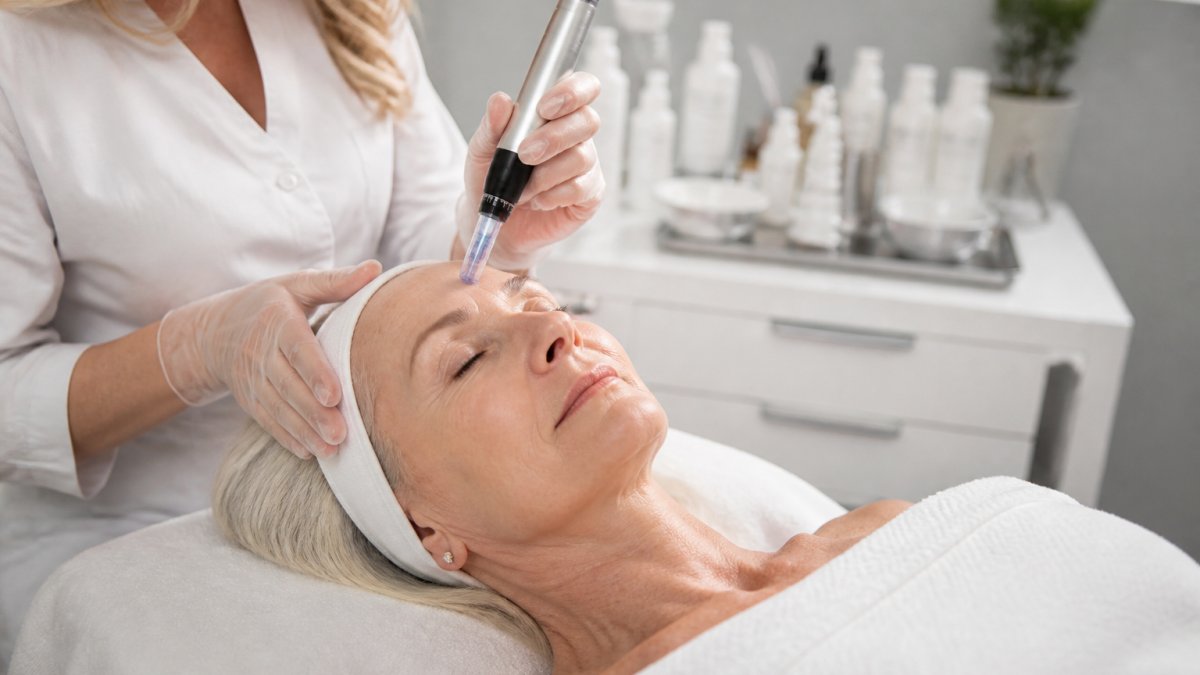
- Microneedling and collagen-stimulating treatments to firm skin over time
- Laser treatments and gentle resurfacing to smooth texture
- Retinoids and medical-grade skincare to support cell turnover at home
Age Spots, Sun Damage, and Uneven Pigmentation
Pigmentation correction usually takes a combination approach. Gentle resurfacing, energy-based therapies, and topical treatments like retinoids can all help fade sun damage. Daily sun protection is the non-negotiable part. Without it, results fade fast and new spots keep forming.
A Step-by-Step Decision Framework for Skin Rejuvenation
Skin rejuvenation is the process of improving skin tone, texture, and firmness through medical-grade treatments and skincare. For mature skin, the decision sequence matters more than the menu, because the same procedure that suits a 35-year-old may be a poor fit for a 65-year-old with thinner skin, slower healing, or a medication list that affects bleeding and bruising. Use this framework to narrow your choices in the right order.
Step 1: Name your primary concern and one secondary concern
Texture, pigment, or firmness? Pick one to lead with and one to address later. Treating everything at once raises cost, downtime, and risk without improving outcomes. A common pattern is to start with pigment or texture (which respond to resurfacing and topicals) and stage firmness treatments (fillers, collagen stimulators) in a later round.
Step 2: Screen yourself for mature-skin candidacy before you shop
This is the step most articles skip. Before comparing devices or prices, flag anything that changes your risk profile:
- Medications: blood thinners, some antibiotics, isotretinoin (Accutane) history, and immunosuppressants can affect bleeding, healing, or scarring risk. Tell your provider about every prescription, supplement, and topical.
- Medical history: uncontrolled diabetes, autoimmune conditions, active infections, and a history of keloids or poor scarring can rule out aggressive resurfacing.
- Skin fragility: mature skin thins with age and loses barrier function, so aggressive peels and high-energy laser settings carry higher risk of prolonged redness, pigment change, and delayed healing.
- Pregnancy and breastfeeding: most injectables and energy devices are deferred.
If any of these apply, your shortlist should lean toward lower-energy, staged, or topical-first approaches, and a clinician assessment should come before any booking.
Step 3: Set your downtime budget in days, not vibes
Ask how many days you can realistically take off work and social plans. Neuromodulators and most fillers fit a one-to-two-day window. Microneedling often needs two to four days of redness. Fractional laser resurfacing can require a week or more of peeling and sensitivity. A busy client-facing professional may prefer staged, lower-downtime sessions over one aggressive treatment.
Step 4: Confirm your budget for a full course, not one session
Most rejuvenation treatments are sold in series. Microneedling and collagen-stimulating treatments typically need three to four sessions spaced weeks apart; laser resurfacing often needs two to three; neuromodulators need re-treatment every three to four months. Ask for the total cost of the full course plus twelve months of maintenance before you commit, and request a personalized quote rather than relying on general figures.
Step 5: Book a consultation that includes a written plan
A provider should confirm suitability, explain alternatives, and give you a written plan covering sessions, downtime, risks, and maintenance. If the consultation is a sales pitch with no candidacy screening, walk away.
Step 6: Plan maintenance from day one
Ask what the plan looks like at six and twelve months, not just on treatment day. Providers who map out maintenance up front tend to set more realistic expectations.
Skin Rejuvenation Treatment Downtime and Recovery Timelines
Skin rejuvenation treatment downtime varies widely by procedure, and mature skin generally recovers more slowly than younger skin because cell turnover and barrier repair slow with age. The table below summarizes typical patterns; your provider should give you a written estimate for your specific plan.
| Treatment | Typical sessions | Downtime | When results appear | How long results last |
|---|---|---|---|---|
| Neuromodulators (Botox, Dysport) | 1, then every 3-4 months | None to 1 day | 3-7 days | 3-4 months |
| Dermal fillers | 1, touch-up at 2-4 weeks | 1-3 days of swelling or bruising | Immediate to 2 weeks | 6-18 months depending on product and site |
| Microneedling | 3-4 spaced 4-6 weeks apart | 2-4 days of redness | 4-8 weeks after series | 6-12 months with maintenance |
| Collagen-stimulating treatments (e.g., radiofrequency microneedling, poly-L-lactic acid) | 3-4 spaced 4-6 weeks apart | 2-5 days | 8-12 weeks, builds gradually | 1-2 years with touch-ups |
| Non-ablative fractional laser | 2-3 spaced 4-6 weeks apart | 3-7 days of redness and flaking | 4-8 weeks | 1-2 years with sun protection |
| Ablative laser resurfacing | 1 | 7-14 days of peeling and sensitivity | 2-4 weeks | Several years, but higher risk in mature skin |
| Chemical peels (medium depth) | 2-4 spaced 4-6 weeks apart | 3-7 days of peeling | 1-2 weeks | 3-6 months |

Why mature skin recovers differently
Three factors change the recovery math after 50: the skin barrier is thinner and loses moisture faster, collagen production is slower, and cumulative sun damage makes pigment cells more reactive. That means redness can linger longer, post-inflammatory hyperpigmentation is more likely after aggressive resurfacing, and a treatment that took a week to recover from at 40 may take ten days at 60. Providers often lower energy settings or stage sessions for mature skin rather than pushing one aggressive treatment.
Plan around your calendar, not against it
A busy professional in a client-facing role may prefer staged, lower-downtime sessions over one aggressive treatment. Ask your provider for a written recovery estimate before booking, and schedule treatments so the visible recovery window falls on days you can stay out of the sun and skip social plans. Sun exposure during recovery is the most common reason results fade early or new dark spots form.
How Long Skin Rejuvenation Results Last and What Maintenance Requires
How long skin rejuvenation results last depends on the treatment. Neuromodulators typically soften lines for a few months. Fillers last longer but still need touch-ups. Collagen-stimulating treatments build gradually and can hold for a year or more with proper care.
Maintenance is where most people get caught out. A common mistake is budgeting for the first round of treatment sessions and not for the upkeep. Ask about a maintenance schedule and total cost before you start. Pricing depends on the treatment plan, so request a personalized quote rather than relying on general figures.
Choosing a Skin Rejuvenation Provider: What to Ask Before You Commit
Choosing a skin rejuvenation provider comes down to training, honesty, and follow-through. Ask these questions at your consultation:
- Who performs the treatment, and what is their training?
- What results are realistic for my skin type and concern?
- What are the risks and contraindications for my case?
- What is the full plan, including sessions and maintenance?
- Can I see before-and-after photos from similar clients?
- What happens if I have a reaction or a result I am unhappy with?
A provider who answers vaguely, or promises dramatic results with no caveats, is a warning sign. For general safety guidance on aesthetic procedures, the U.S. Food and Drug Administration's consumer information on cosmetic procedures is a useful starting point.
Risks, Contraindications, and Mature-Skin Safety
No rejuvenation treatment is risk-free. Common side effects include redness, swelling, bruising, and temporary sensitivity. Rarer risks include infection, scarring, and pigment changes, which matter more for mature and sensitive skin because healing slows with age.
Contraindications to discuss openly include pregnancy, active skin infections, uncontrolled medical conditions, and certain medications that affect healing or bleeding. Tell your provider about every product you use, including retinoids and blood thinners. Mature-skin safety also means spacing treatments sensibly and letting the skin barrier recover between sessions.
Conclusion
Choosing skin rejuvenation treatments for mature skin is a decision about fit, not fashion. The right plan matches your concern, your downtime, your budget, and your skin's tolerance. It also comes with a maintenance schedule you can actually keep up with.
At House of D, LLC, we build personalized plans around medical-grade skincare and treatments that support aging gracefully at a cellular level. We start with your skin, explain your options honestly, and map out results and upkeep before you commit.
Frequently Asked Questions
What skin rejuvenation treatments work best for mature skin?
There is no single best option because mature skin concerns vary. Retinoids and medical-grade skincare support cell turnover and collagen production over time. Energy-based therapies, microneedling, and gentle resurfacing target texture and fine lines, while neuromodulators and dermal fillers address dynamic wrinkles and volume loss. Pigmentation often needs a separate approach, such as light-based treatments plus daily sun protection. A personalized treatment plan built around your skin type, concerns, and recovery tolerance matters more than picking the most popular procedure.
How much downtime should I expect after skin rejuvenation treatments?
Downtime depends on the treatment. Neuromodulators and most dermal fillers typically involve little to no recovery time, though mild redness or swelling can occur. Microneedling and gentle resurfacing often cause redness for a few days. More aggressive laser treatments can require a week or more of visible healing. Ask your provider for a realistic recovery window before booking, and plan around work and social commitments. Skin rejuvenation treatment downtime is one of the most important factors in matching a procedure to your schedule.
How long do skin rejuvenation results last?
Results vary by treatment and by how your skin responds. Neuromodulators usually soften lines for a few months, while dermal fillers can last many months to over a year depending on the product and area. Collagen-stimulating treatments like microneedling build gradually and may hold for months with maintenance sessions. Pigmentation correction often needs ongoing sun protection to prevent recurrence. Your provider can outline a maintenance schedule so you know what to expect before you start.
What should I ask a provider before starting a skin rejuvenation treatment?
Ask who will perform the treatment and what credentials they hold. Confirm the provider's experience with your skin type and concerns, and request before-and-after photos of comparable patients. Ask about risks, contraindications, expected recovery time, and how many sessions you will likely need. Get a written plan that includes maintenance and total cost, not just the first session. Choosing a skin rejuvenation provider carefully matters as much as the treatment itself, so take time with the consultation.