 comparison
Medical Spa vs Traditional Facial Spa: Which Fits You
Last Updated: October 26, 2026
Quick Summary
A medical spa offers facials under clinical oversight, with a skin analysis, stronger professional-grade products, and treatments that reach deeper skin layers. A traditional facial spa focuses on relaxation and routine maintenance with gentler, surface-level care. Choose a medical spa for specific skin concerns and a traditional spa for relaxation.
- Medical facials begin with a skin analysis and consultation before a personalized treatment plan.
- Medical facials are usually supervised by a physician or licensed clinician, while spa facials are performed by an esthetician.
- Medical spas use professional-grade products with higher active concentrations than traditional spas.
- Medical facials usually cost more per session, and multi-visit plans add up.
- Verify a provider's license and supervision arrangement through your state's licensing board before booking.
Table of Contents
- What Each Type of Spa Actually Offers
- Medical Facial vs Spa Facial: Side-by-Side Comparison
- Treatment Depth, Products and Equipment
- Provider Licensing, Supervision and Safety
- Benefits of a Medical Spa Facial and Realistic Results
- How Long a Spa Facial Lasts and What Affects Results
- Choosing the Right Facial for Your Skin Goals and Budget
- Frequently Asked Questions
What Each Type of Spa Actually Offers
Choosing between a medical spa and a traditional facial spa comes down to one question: do you want a relaxing treatment or a clinically directed one? Both can improve how your skin looks, but they work in different ways. Knowing where each one fits saves time, money and disappointment.
What a medical spa is
A medical spa, or med spa, combines spa-style services with treatments that involve medical oversight. Services are typically delivered by licensed aestheticians, nurses or other clinicians, with a physician or licensed medical professional providing supervision. Many med spas also offer injectables, lasers and other procedures that require a medical license to perform.
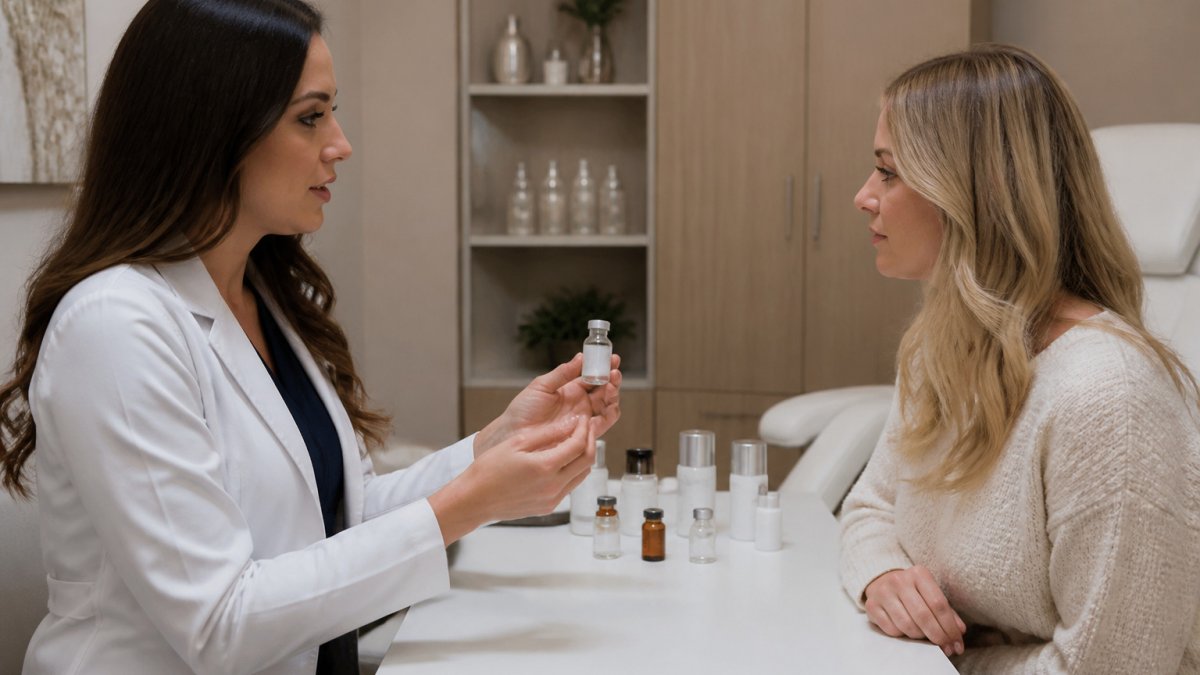
For facials specifically, a medical spa typically starts with a skin analysis and consultation before recommending a personalized treatment plan. Treatments may use professional-grade skincare products with higher concentrations of active ingredients, and facials may include extractions or chemical peels that reach deeper than surface-level exfoliation.
What a traditional or day spa is
A traditional or day spa focuses on relaxation and general wellbeing. Facials at these spas usually include cleansing, steaming, exfoliation, extractions and facial massage, delivered by an esthetician in a calm, spa-style setting. The goal is to leave you feeling refreshed and your skin looking healthy.
Day spa facials are generally not performed under medical supervision, and they rarely go beyond the outer layers of the skin. That makes them a low-intensity option for routine care, not a tool for addressing specific clinical skin concerns.
Medical Facial vs Spa Facial: Side-by-Side Comparison
Here is how the two options compare on the factors that matter most when choosing a facial.
| Factor | Medical Facial | Spa Facial |
|---|---|---|
| Primary goal | Treat specific skin concerns | Relaxation and routine care |
| Supervision | Physician or licensed clinician oversight | Licensed esthetician |
| Product strength | Professional-grade, higher active concentrations | Gentler, general-purpose products |
| Treatment depth | Can reach deeper skin layers | Mostly surface-level |
| Typical add-ons | Chemical peels, clinical devices | Massage, aromatherapy |
| Best for | Acne, fine lines, pigmentation, texture | Hydration, relaxation, maintenance |
Pros of a medical facial:
- Customized plan based on a clinical skin assessment
- Stronger treatments for specific concerns
- Medical oversight for higher-intensity procedures
Cons of a medical facial:
- Usually costs more per session
- May involve redness or downtime after stronger treatments
- Requires a consultation before booking
Pros of a spa facial:
- Relaxing, low-pressure experience
- Lower cost and easier to book regularly
- Minimal recovery time
Cons of a spa facial:
- Limited effect on deeper concerns such as fine lines or pigmentation
- Results are generally modest
- Little or no medical oversight for skin conditions
Treatment Depth, Products and Equipment
Treatment depth is the clearest technical difference between the two. A medical facial may use chemical peels or microdermabrasion that affect deeper layers of the skin, while a traditional facial focuses on the epidermis.
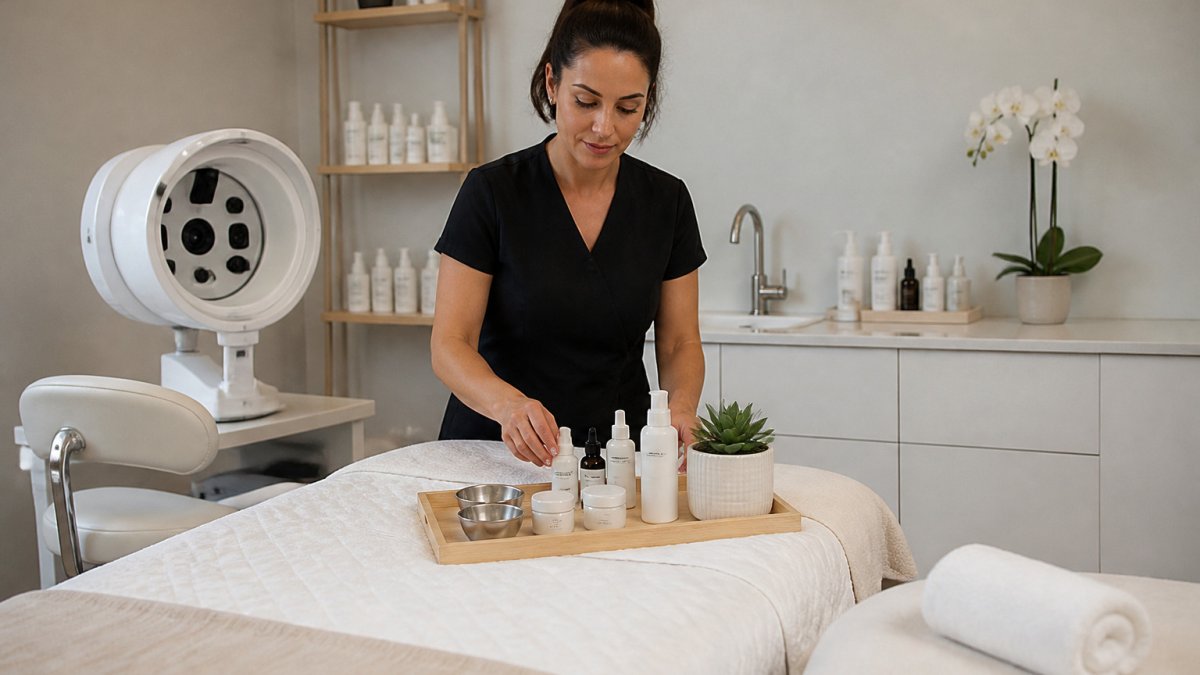
Product strength follows the same pattern. Medical spas typically use medical-grade skincare with higher concentrations of active ingredients such as retinoids, acids and antioxidants.
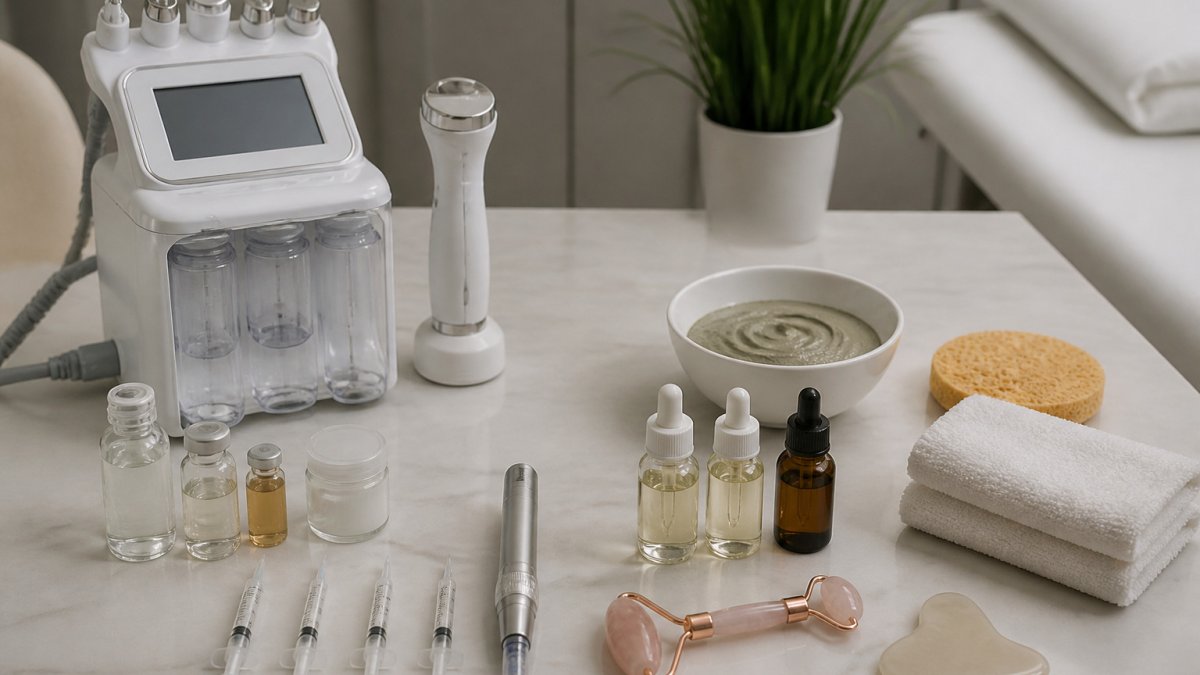
Equipment also differs. Medical spas may use clinical devices and skin analysis tools to evaluate skin before treatment. Traditional spas rely mainly on manual techniques and basic steaming or cleansing tools.
Provider Licensing, Supervision and Safety
Provider credentials are the single most important difference between a medical facial and a traditional spa facial, and they are also the area where readers most often get vague answers. Licensing rules vary by state, so there is no single national standard for who may perform every facial service. What follows is the practical framework most states use, plus the questions that separate a well-run medical spa from a poorly supervised one.
Who is allowed to do what
In general, a licensed esthetician may perform facials, cleansing, exfoliation, extractions, and massage within the scope defined by the state cosmetology or esthetics board. Services that break the skin, use prescription-strength actives, or involve energy devices typically require a medical license or direct physician oversight. That includes injectables, many lasers and intense pulsed light devices, deeper chemical peels, and microneedling with radiofrequency in some states. A medical spa is structured so a physician, nurse practitioner, or physician assistant provides the required supervision or delegation.
Questions to ask before you book
A reputable medical spa should answer these without hesitation:
- Who will actually perform my facial, and what is their license or certification?
- Who is the supervising physician or clinician, and how are they involved in my care?
- Is a consultation required before treatment, and who conducts it?
- What is the plan if I have a reaction or complication after treatment?
- Which products and devices will be used, and what are their approved indications?
If the answers are evasive or the front desk cannot name the supervising clinician, treat that as a warning sign. You can verify a provider's license through your state's licensing board, which is the official source for credential status and disciplinary history.
Safety, contraindications, and recovery
Safety depends heavily on your skin history and the intensity of the treatment. Common contraindications for stronger facials include active acne with open lesions, recent sun exposure or sunburn, a history of cold sores (for peels near the mouth), pregnancy (for certain actives such as high-dose retinoids), and use of isotretinoin within the past several months.
Recovery expectations vary by service. A gentle medical facial may cause mild redness for a few hours. A medium chemical peel or microneedling session can involve several days of redness, peeling, or sensitivity, and sun protection is essential during that window.
Red flags in supervision
Be cautious if a med spa cannot clearly explain who supervises clinical services, if treatments are performed in a room without appropriate equipment or privacy, or if you are offered a high-intensity treatment without any skin assessment. Medical oversight is not a formality; it is the mechanism that makes stronger treatments safer for the people who should not receive them.
Benefits of a Medical Spa Facial and Realistic Results
A medical spa facial can address concerns that a traditional facial cannot, such as persistent acne, uneven pigmentation, texture, and early signs of aging. To see what these treatments do for wrinkles specifically, read what actually works with medical-grade skincare for wrinkles. The benefit comes from the combination of a clinical assessment, stronger treatments, and a plan designed around your skin. But the most useful way to judge results is to separate what changes immediately from what changes gradually, because that distinction is where most disappointment originates.
Immediate effects versus gradual change
Some effects are visible right away. Hydration, glow, and smoother surface texture often show up within a day or two of a gentle medical facial. Those effects are real but temporary, and they fade as the skin returns to its baseline.
Other changes are gradual and cumulative. Improvements in pigmentation, fine lines, and acne-related texture typically emerge over a series of treatments spaced weeks apart, because the skin needs time to remodel between sessions.
What the evidence supports, and what it does not
Medical-grade actives and devices have plausible mechanisms: retinoids support cell turnover, acids loosen dead surface cells, and energy devices stimulate collagen remodeling over time. What the evidence does not support is the idea that a medical facial always produces longer-lasting results than a spa facial. Results depend on the treatment, your skin, your consistency, and your aftercare. A well-executed series of spa facials can maintain healthy skin, and a single medical facial will not permanently resolve pigmentation or deep lines.
Factors that affect your results
- Skin type and baseline condition, including sensitivity and oiliness
- The specific treatment and its intensity
- How consistently you follow aftercare and sun protection
- Whether you complete the recommended series rather than stopping after one session
- Lifestyle factors such as smoking, sleep, and sun exposure
Setting realistic expectations
A provider who promises dramatic results after one visit should be questioned. A better conversation covers the expected timeline, the number of sessions, the total cost, and the signs that a treatment is not working for your skin. If a concern does not improve after a reasonable series, a clinician should reassess rather than simply selling another package.
How Long a Spa Facial Lasts and What Affects Results
A traditional spa facial typically lasts about a few days to a week before the skin returns to its usual condition, which is why many people book them monthly. The effects are mostly hydration and a smoother surface, not lasting structural change.
Medical facial results tend to last longer when treatments are part of a planned schedule. Factors that affect how long results last include your skin type, lifestyle, sun exposure, skincare routine and how often you return for maintenance. Your provider can recommend a treatment frequency based on your goals.
Choosing the Right Facial for Your Skin Goals and Budget
Start with your goal. If your concerns are age-related, read how to choose skin rejuvenation for mature skin to narrow down treatments suited to your skin.
Budget matters too. Medical facials typically cost more per session, and a multi-visit plan adds up.
Ask a few questions before you book: Who performs the treatment? What is the clinical goal? What are the risks and expected recovery? For a clear breakdown of whether medical skincare is worth the cost, see that guide.
Frequently Asked Questions
How is a medical spa facial different from a traditional facial?
A traditional spa facial focuses mainly on relaxation, cleansing, steaming and massage, using lighter products. Neither option is automatically better; the right choice depends on your skin goals, skin condition and comfort level. A consultation with a qualified provider can help you decide which approach fits.
How long does a spa facial last?
A traditional spa facial usually runs about 60 to 90 minutes, depending on the package and the add-ons selected. A medical facial often takes a similar or somewhat longer appointment because of skin analysis, consultation and any clinical steps. The visible effects of a facial, such as a refreshed, hydrated look, are often short-lived and may fade within days to a couple of weeks. Longer-lasting improvement generally depends on a series of treatments and a consistent at-home routine. Ask your provider how long results are expected to last for your specific treatment.
What should I ask before booking a medical spa facial?
Ask who performs the treatment and what their licensing is, and confirm that a medical professional is supervising the clinic. Request a consultation so the provider can evaluate your skin before recommending a treatment. Ask which products and devices will be used, what active ingredients they contain, and what side effects, downtime or contraindications to expect. Also ask how many sessions are typically recommended and what the total cost of the plan will be, since pricing varies by provider and treatment.
Are medical spa facials better for acne or signs of aging?
Suitability depends on your skin type, medical history and current skin condition. Some people with active acne or sensitive skin may need a different approach, and certain treatments are not appropriate for everyone. A licensed provider can assess your skin and explain potential risks, recovery time and realistic outcomes before you commit to a plan.