 how-to
How Can Young Professionals Prevent Skin Aging?
Last Updated: October 25, 2026
Quick Summary
Preventative skin treatments work by addressing aging at the source through sun damage prevention, collagen support, and cellular stress reduction before fine lines appear. Young professionals can build a foundation with medical-grade skincare, daily broad-spectrum sunscreen, and strategic professional facials every 4-6 weeks to maintain skin and avoid costly corrections later.
- Start with four essentials: a cleanser, retinoid, vitamin C serum, and broad-spectrum sunscreen SPF 30 minimum.
- Medical-grade skincare requires at least 8-12 weeks of consistent use to see meaningful changes in texture and tone.
- Professional facials every 4-6 weeks provide higher-concentration actives and collagen stimulation beyond at-home routines.
- Light chemical peels every 2-4 weeks treat early sun damage and prevent it from deepening into permanent pigmentation.
- Begin professional treatments only after 12 weeks of consistent home care and when downtime fits your calendar.
Table of Contents
- Why Preventative Skin Treatments Matter Before Fine Lines Appear
- Building a Medical-Grade Skincare Routine to Prevent Aging
- Daily Sun Protection and UV Defense: The Foundation of Prevention
- Professional Facials for Skin Maintenance and Collagen Support
- Chemical Peels for Younger Skin: Starting Early for Long-Term Results
- When Professional Treatments Become Necessary: Timing and Expectations
- Creating Your Personalized Prevention Plan at House of D, LLC
- Frequently Asked Questions
Why Preventative Skin Treatments Matter Before Fine Lines Appear
Fine lines creep in quietly during your 30s, often before you notice.
Preventative skin treatments work because they address aging at the source. Sun damage, collagen breakdown, and cellular stress accumulate silently.
The math is simple: one hour of prevention now saves dozens of hours of correction later.
This isn't vanity; it's efficiency. Young professionals face long hours, stress, irregular sleep, and sun exposure, and their skin shows all of it.
Building a Medical-Grade Skincare Routine to Prevent Aging
Medical-grade formulations use higher concentrations of actives, smaller molecular sizes for deeper penetration, and proven efficacy standards. Learn what medical-grade skincare actually does to prevent wrinkles.
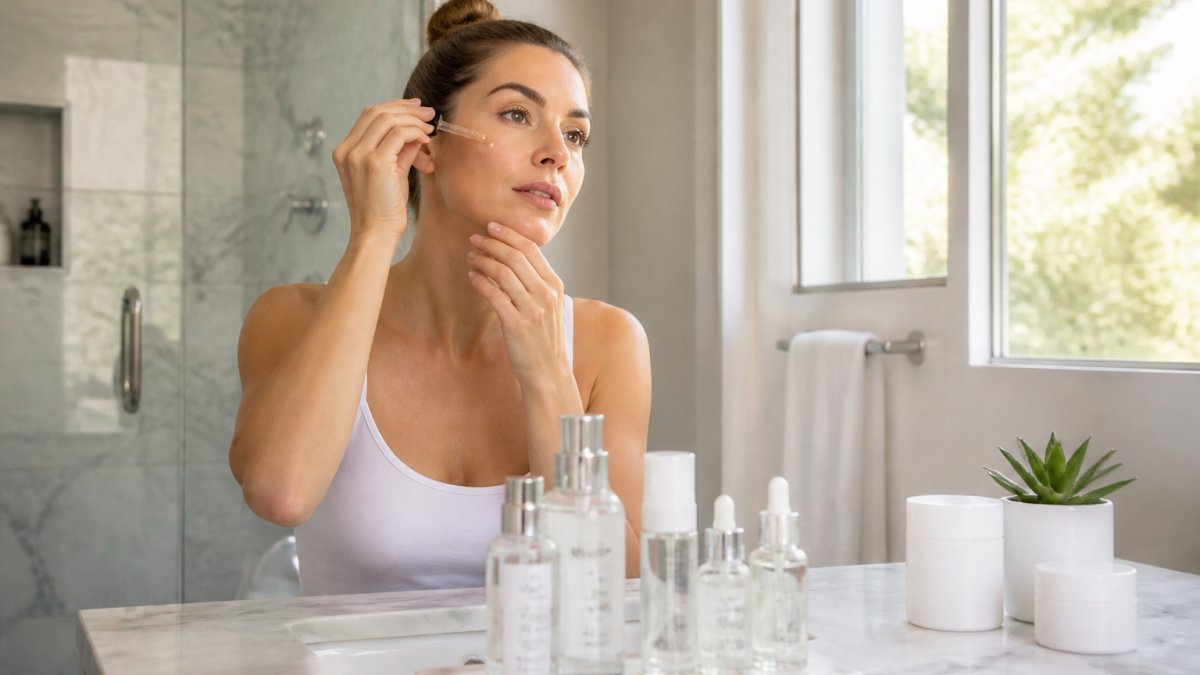
Start with three essentials: a cleanser that removes daily grime without stripping moisture, a retinoid to stimulate collagen production, and a broad-spectrum sunscreen. Explore skin care services and products available to build your preventative routine. Add a vitamin C serum for antioxidant protection against environmental stress. These four products form the foundation of preventative skincare.
Retinoids are the gold standard for preventing fine lines (Retinoids: active molecules influencing skin structure formation in cosmetic and...).
Vitamin C serums work best applied in the morning under sunscreen. They neutralize free radicals from pollution and UV exposure.
Hydration matters more than most people realize. Dehydrated skin shows fine lines more prominently.
Many young professionals use products sporadically, then wonder why results don't show.
Daily Sun Protection and UV Defense: The Foundation of Prevention
Sun damage is cumulative and irreversible. Discover complementary natural approaches to maintain youthful skin through daily prevention steps.
Broad-spectrum sunscreen (SPF 30 minimum, SPF 50+ preferred) blocks both UVA and UVB rays. UVA rays cause premature aging and collagen breakdown (The impact of ultraviolet radiation on skin photoaging, review of in vitro studies).
Apply sunscreen every morning, even on cloudy days, and reapply every two hours outdoors.
Mineral sunscreens (zinc oxide or titanium dioxide) sit on the surface and reflect rays; chemical sunscreens absorb and convert UV energy to heat.
Don't forget often-missed areas: ears, the back of your neck, your chest, and the tops of your hands.
Professional Facials for Skin Maintenance and Collagen Support
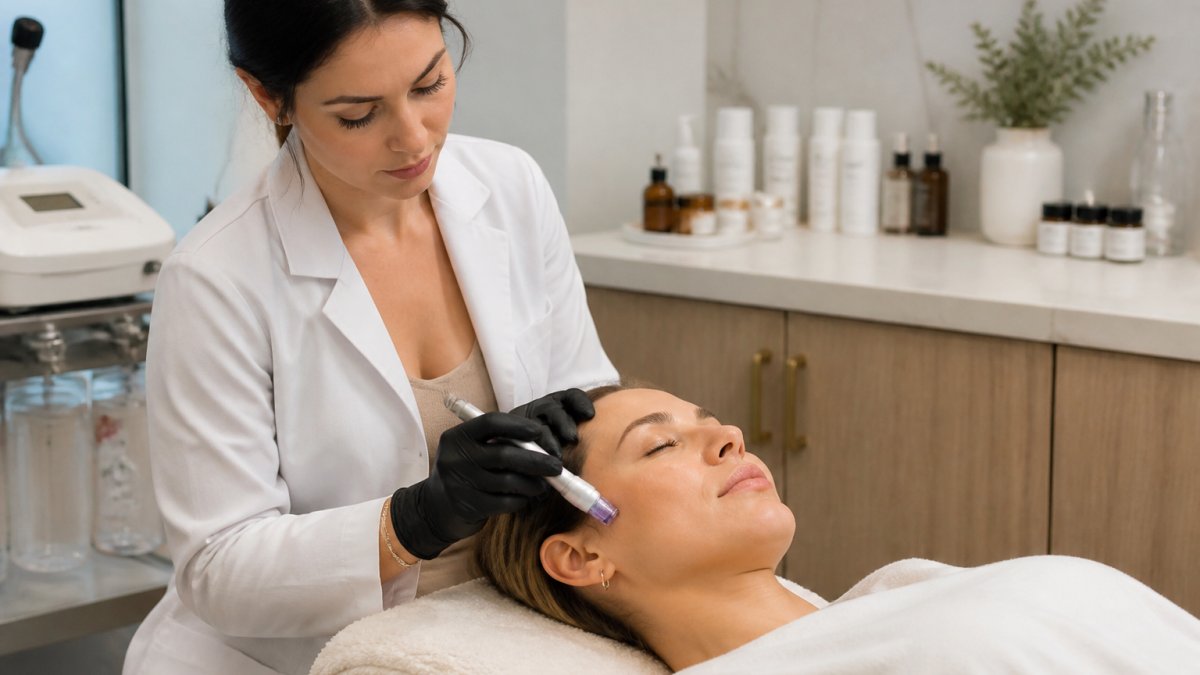
Professional facials occupy a useful middle ground: more active than a good home routine, less disruptive than peels or lasers. The practical question is which type fits your skin, schedule, and budget.
What a professional facial actually does
A clinical facial combines cleansing, exfoliation, extraction if needed, and infusion of targeted actives, finished with barrier support. Its edge over at-home care: higher-concentration actives applied by a trained provider, more even professional exfoliation, and lymphatic massage that reduces puffiness. Collagen stimulation from a single facial is modest; the visible change comes from cumulative treatments plus consistent home care.
Matching the facial to your skin type
- Dehydrated or dull skin (common with long office hours and air conditioning): hydrating facials with hyaluronic acid and calming actives. Zero downtime; you can return to work immediately.
- Oily or congestion-prone skin: enzyme or mild salicylic-acid facials to clear dead cells and reduce clogged pores. Expect mild redness for a few hours.
- Sensitive or rosacea-prone skin: avoid aggressive extractions and strong acids; ask for barrier-repair focused facials with azelaic acid or niacinamide. Patch-test first.
- Skin of color or a history of post-inflammatory hyperpigmentation: avoid high-strength mechanical exfoliation and aggressive extractions, which can trigger dark spots. Gentle chemical exfoliation with lactic acid is usually better tolerated than scrubs.
- Early sun damage or mild texture: mild glycolic or lactic acid facials, typically every 4 weeks.
Downtime and workplace scheduling
| Facial type | Typical visible downtime | Best timing |
|---|---|---|
| Hydrating / calming | None to a few hours of mild flush | Lunch break or evening |
| Enzyme exfoliating | A few hours of redness | Evening before a light day |
| Mild chemical (glycolic/lactic) | 1-2 days of mild redness or light flaking | Thursday evening if Friday is flexible |
| Extraction-heavy | 1-3 days of redness or minor scabbing | Before a weekend |
Practitioners commonly schedule the first session of any new facial type on a Friday or before a low-stakes weekend, so you learn your skin's response before booking ahead of a client presentation.
Cost and maintenance frequency
A realistic preventative cadence is every 4-6 weeks; consistency matters more than frequency.
Chemical Peels for Younger Skin: Starting Early for Long-Term Results
Chemical peels sound intense, but a light peel simply uses a mild acid solution to dissolve the outermost layer of dead skin cells, leaving brighter, smoother skin with improved texture and tone.
Light peels work on early sun damage, mild hyperpigmentation, and fine lines, with minimal downtime, mild redness or slight flaking for 2-3 days. Explore the Illuminize Chemical Peel as an entry-level preventative treatment. Repeat every 2-4 weeks for cumulative results.
Starting peels early prevents damage from deepening: treating early sun spots now avoids the deep pigmentation that requires aggressive treatments later. Prevention compounds over time.
Medium peels penetrate deeper and show more dramatic results, but require 5-7 days of visible recovery. They're better suited for those with established damage rather than early prevention. Start light. Advance only if needed.
Schedule peels in fall or winter when sun exposure is lower. Treated skin is more sun-sensitive for weeks afterward. Strict sunscreen use is mandatory.
When Professional Treatments Become Necessary: Timing and Expectations
Most guides list procedures without answering the question young professionals actually have: do I need this yet, and can I fit it around work? Here is a decision framework, realistic recovery windows, and the cases where the right answer is to wait.
A simple decision framework
Work through these four questions in order. If the answer to the first two is yes, a professional treatment is worth discussing; if the answer to the last two is no, it can usually wait.
- Is the concern persistent? Fine lines that are still visible when your face is relaxed, dark spots that survive 8-12 weeks of consistent sunscreen and a retinoid, or texture that has not improved with a stable home routine for three months.
- Has home care plateaued? If you have used a consistent routine (cleanser, retinoid, antioxidant, sunscreen) for at least 12 weeks and see no further change, a professional treatment can add what topicals cannot reach.
- Does the downtime fit your calendar? Match the treatment to your next low-stakes window, not the other way around.
- Is the cost sustainable? Most professional treatments are maintenance, not one-time fixes. If you cannot sustain the cadence, the result fades and the money is poorly spent.
Recovery timelines by treatment intensity
| Treatment | Typical visible downtime | Typical U.S. cost per session | Maintenance cadence |
|---|---|---|---|
| Hydrating facial | None to a few hours | $100-$250 | Every 4-6 weeks |
| Light chemical peel | 2-3 days of mild redness or flaking | $150-$300 | Every 2-4 weeks initially |
| Medium chemical peel | 5-7 days | $300-$600 | Every 3-6 months |
| Microdermabrasion | A few hours to 1 day | $100-$200 | Every 2-4 weeks |
| Botulinum toxin (preventative dosing) | None to minor bruising for 1-3 days | $200-$600 per area | Every 3-4 months |
| Hyaluronic acid filler | 1-3 days of swelling or bruising | $600-$1,000 per syringe | Every 6-18 months |
| Non-ablative laser | 3-7 days | $500-$1,500 per session | Series of 3, then annually |
| Ablative laser resurfacing | 7-14 days | $2,000-$6,000 | Rarely repeated |
The pattern that matters: the longest-downtime treatments are almost never appropriate for early prevention, while the shortest-downtime ones are sustainable alongside a demanding job.
When treatment is not necessary
- You are under 25 with no persistent concerns. Sunscreen, a retinoid, and an antioxidant are the highest-return interventions; procedures add little.
- Your concern is dehydration or sleep-related dullness. Hydration, sleep, and stress management fix this more cheaply than any procedure.
- You have not yet tried 12 weeks of consistent home care. Most early concerns respond to a stable routine; jumping to procedures skips the cheapest step.
- You cannot commit to daily sunscreen. Any resurfacing or peel without consistent UV protection is a poor investment, because new damage will undo the result.
- You are pregnant or breastfeeding. Retinoids and many procedure protocols are contraindicated; defer and consult your physician.
Prevention beyond procedures
Sleep, stress, smoking, and alcohol all show on the skin, and no procedure compensates for them. Dermatologists commonly see that patients who protect sleep and manage stress get more from lighter, cheaper treatments than those relying on procedures alone. If your calendar is the constraint, prioritize sunscreen consistency and sleep before adding a procedure.
Book a consultation to review your concerns against this framework and get a plan that fits your schedule.
Creating Your Personalized Prevention Plan at House of D, LLC
A consultation evaluates your skin, discusses your goals, and builds a realistic plan. Some people need only a solid skincare routine.
The best plan is one you'll actually follow.
Book a consultation to get personalized guidance on preventative skin treatments suited to your skin type, concerns, and professional schedule.
Start now. Your skin at 45 will thank you for decisions you make today.
Preventative skin treatments give young professionals control over aging.
Frequently Asked Questions
What is a good preventative skin treatments routine to start in your 30s?
A solid routine includes daily broad-spectrum sunscreen (SPF 30+), a gentle cleanser, a retinoid or vitamin C serum, and a hydrating moisturizer. Medical-grade products deliver higher concentrations of active ingredients than over-the-counter options. Consider adding a professional facial every 4-6 weeks and consulting a skincare professional to customize recommendations based on your skin type and concerns. Starting early with these steps can delay the appearance of fine lines and maintain skin elasticity.
How often should you get a professional facial for skin maintenance?
Most professionals recommend monthly or every 4-6 weeks for optimal results. This frequency allows your skin to complete its renewal cycle while maintaining the benefits of professional treatments. However, the ideal schedule depends on your skin type, specific concerns, and treatment type. A skincare professional can assess your needs and recommend a maintenance plan that fits your lifestyle. Consistency matters more than intensity, regular facials outperform occasional intensive treatments.
Can sunscreen and a skincare routine actually prevent premature skin aging?
Yes. Sun damage causes approximately 80% of visible skin aging, including wrinkles, dark spots, and texture changes. Daily broad-spectrum sunscreen protects against UVA and UVB rays that break down collagen and elastin. Combined with a preventative skincare routine using active ingredients like retinoids and antioxidants, sun protection significantly slows aging. Studies show that consistent use of sunscreen and medical-grade skincare can reduce fine lines and improve skin texture over time, making prevention far more effective than trying to reverse damage later.
Is it too early to start preventative skin treatments in your late 30s?
No, your late 30s is an ideal time to start or intensify preventative measures. Fine lines and loss of skin elasticity typically become noticeable in this decade, and early intervention prevents deeper wrinkles from forming. Professional treatments like chemical peels and facials work best as prevention rather than correction. Starting now with medical-grade skincare and professional facials can maintain your skin's youthful appearance and reduce the need for more intensive treatments later. A consultation with a skincare professional can help determine which preventative treatments suit your current skin condition.