 how-to
How to Treat Stress-Induced Aging Effectively
Last Updated: November 13, 2026
Quick Summary
Effective treatments for stress-induced aging start with stabilizing the foundation: consistent sleep, daily SPF 30+ sunscreen, a simple barrier routine, and one repeatable stress-lowering practice. Then add targeted skincare in order, barrier repair, gentle exfoliation, retinoids, and pigmentation care, and escalate to clinical care if concerns persist after eight to twelve weeks.
- Chronic cortisol elevation can affect sleep, skin, and metabolism.
- Fix your wake time for two weeks before chasing an earlier bedtime.
- Aim for about 150 minutes of moderate aerobic activity weekly plus two resistance sessions.
- Slow breathing at four counts in and six counts out can lower heart rate within one session.
- See a clinician if skin concerns persist after eight to twelve weeks of foundation care.
Table of Contents
- How Stress Speeds Up Biological Aging
- Can Stress Aging Be Reversed?
- Stress-Induced Inflammation and Your Skin Barrier
- Chronic Stress and Skin Aging: What Changes on Your Face
- Stress Management Techniques That Actually Move the Needle
- A Prioritized Treatment Plan by Stress Severity
- Measuring Progress Without Overreading Biological Age Tests
- Booking a Medical-Grade Skin and Wellness Consultation
- Frequently Asked Questions
How Stress Speeds Up Biological Aging
Chronic stress doesn't just wear you down mentally. It changes how your body ages at the cellular level.
At House of D, LLC, we see this in clients who come in with skin and energy concerns that started during a hard season of life.
- Cortisol is your main stress hormone. Chronic elevation can affect sleep, skin, and metabolism.
- Inflammation rises with ongoing stress and can speed tissue breakdown.
- Oxidative stress damages cells and contributes to premature aging.
The rest of this guide explains what actually changes, which treatments work, and how to build a plan that fits your stress level.
Can Stress Aging Be Reversed?
Partially, yes. Many stress-related changes to skin, sleep, and energy can improve once the stress response calms down. Some cellular markers are harder to move than others, so realistic expectations matter. For a deeper look at cellular-level approaches, read our guide on how to get the benefits of cellular level anti-aging.
What tends to improve with consistent effort:
- Skin dullness, breakouts, and dryness linked to stress
- Sleep quality and daytime energy
- Blood pressure and resting heart rate, in many cases
What takes longer: deep collagen changes and structural skin aging. These need both stress management and targeted treatment.
Stress-Induced Inflammation and Your Skin Barrier
Stress-induced inflammation is the immune system's response to ongoing pressure, and your skin shows it early. When cortisol stays high, the skin barrier weakens. That means more water loss, more irritation, and slower repair.
Signs your barrier is struggling:
- Skin feels tight or stings after washing
- Redness that lingers longer than usual
- Products that used to be fine now burn
Medical-grade skincare can help rebuild the barrier with ingredients chosen for your skin, not guesswork. Our article on medical-grade skincare for wrinkles explains which ingredients actually support repair and protection.
Chronic Stress and Skin Aging: What Changes on Your Face
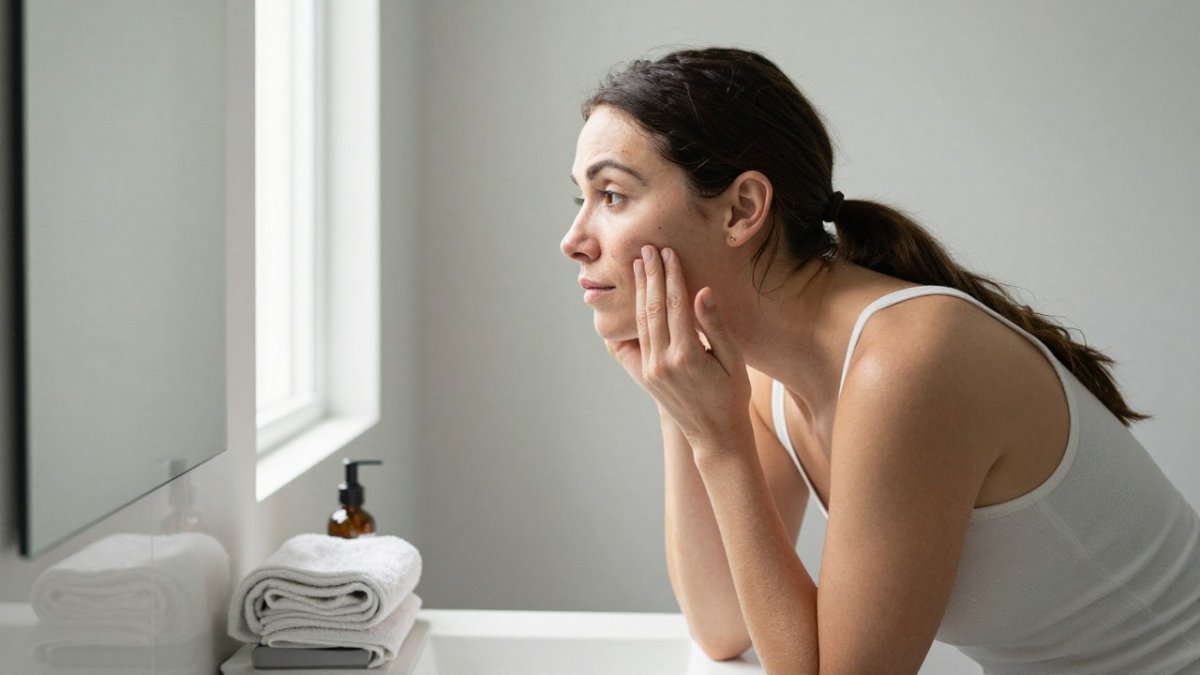
Chronic stress and skin aging connect through three visible pathways: collagen breakdown, reduced cell turnover, and uneven pigmentation. Fine lines deepen faster, skin looks tired, and tone becomes less even.
The woman is American.
What you may notice first:
- Fine lines around the eyes and mouth
- Dullness and slower recovery from breakouts
- Darker patches from sun plus stress
None of these are permanent, but they rarely fade on their own without changes to sleep, stress, and skincare.
Stress Management Techniques That Actually Move the Needle
Most lists of stress-management techniques read the same: sleep, exercise, meditate, breathe. That advice is not wrong, but it is not enough to change how your body ages. What separates techniques that move the needle from techniques that just feel nice is whether they repeatedly lower the stress response enough for repair to happen, and whether you can sustain them on a bad week.
Sleep regularity before sleep duration
Sleep is the single highest-leverage recovery tool for stress-induced aging because growth hormone release, collagen repair, and immune regulation cluster in deep sleep. Most practitioners find that a consistent wake time matters more than a perfect bedtime, because it anchors the circadian rhythm that drives cortisol's daily curve.
- Mechanism: Restores cortisol's morning peak and evening trough, supports tissue repair, and lowers inflammatory signaling.
- Realistic dose: Same wake time seven days a week; dark, cool room; no screens for the last 30 minutes.
- Evidence strength: Strong for mood, immune function, and skin recovery; moderate for measurable skin-aging outcomes.
Watch out: if you snore heavily, wake unrefreshed despite adequate hours, or fall asleep during the day, ask a clinician about sleep apnea before assuming stress is the whole story.
Aerobic and resistance exercise, not just steps
A daily walk is a fine start, but the evidence for exercise and healthy aging is strongest when it combines aerobic work with resistance training. Resistance training supports muscle and bone, which matter more for functional aging than most skincare routines. Aerobic exercise improves mood and cardiovascular markers that chronic stress worsens.
- Mechanism: Improves insulin sensitivity, lowers resting heart rate and blood pressure, and supports mitochondrial health.
- Realistic dose: About 150 minutes of moderate aerobic activity per week plus two resistance sessions, per widely used federal physical-activity guidance.
- Evidence strength: Strong for cardiovascular and metabolic outcomes; moderate for mood and sleep; limited but growing for skin appearance.
Mindfulness and slow breathing with a defined practice
Five minutes of meditation is better than none, but the benefit scales with consistency and with whether you actually slow your breathing. Slow breathing at roughly four counts in and six counts out for two minutes activates the parasympathetic response and can lower heart rate within a single session.
- Mechanism: Increases vagal tone, reduces sympathetic arousal, and lowers perceived stress.
- Realistic dose: Two minutes of slow breathing once or twice daily; ten to twenty minutes of mindfulness most days for broader effects.
- Evidence strength: Moderate for perceived stress and anxiety; limited for direct skin or cellular-aging outcomes.
Therapy and structured stress programs
For people with high stress, trauma history, or ongoing caregiving load, self-guided techniques often are not enough. Cognitive behavioral therapy and structured stress-management programs have some of the strongest evidence for reducing chronic stress, and they address the source rather than only the symptoms.
- Mechanism: Changes appraisal of stressors and reduces rumination, which lowers sustained cortisol exposure.
- Realistic dose: Typically eight to twelve sessions, though format varies.
- Evidence strength: Strong for anxiety, depression, and perceived stress.
Nutrition pattern over single foods
Anti-inflammatory eating patterns, such as Mediterranean-style eating with fish, vegetables, olive oil, and less added sugar, have better evidence than any single supplement. The goal is a pattern you can keep, not a perfect week.
- Mechanism: Reduces inflammatory markers and supports skin barrier function.
- Realistic dose: Fish twice weekly, vegetables at most meals, olive oil as the main fat, and limited sugary drinks.
- Evidence strength: Strong for cardiovascular and metabolic health; moderate for skin and inflammation.
Sun protection as a stress-aging treatment
Daily sunscreen is not glamorous, but ultraviolet exposure compounds the collagen damage that stress already accelerates. Broad-spectrum sunscreen with SPF 30 or higher, reapplied during long outdoor time, is one of the few interventions with strong evidence for visible aging outcomes.
- Mechanism: Prevents further collagen breakdown and pigmentation.
- Realistic dose: Every morning, and again after two hours outdoors or after sweating.
- Evidence strength: Strong for skin cancer and photoaging.
For a routine that pairs stress habits with skin habits, see our daily steps to maintain youthful skin naturally.
A Prioritized Treatment Plan by Stress Severity
Most guides list treatments side by side and leave you to guess the order. That is the gap this section fills: a sequence for choosing and combining interventions based on how severe your stress is and what symptoms you actually have. The logic is simple. Stabilize the foundation first, add targeted skin care second, and escalate to clinical care only when the foundation is in place, because strong treatments applied to a stressed, sleep-deprived body tend to underperform and irritate.
Step 1: Stabilize the foundation (everyone, regardless of severity)
Before any peel, laser, or active ingredient, get these four in place for at least two to four weeks:
- A consistent wake time and seven to nine hours in bed.
- Daily broad-spectrum sunscreen with SPF 30 or higher.
- A simple barrier routine: gentle cleanser, moisturizer, and sunscreen, with no more than one active.
- One stress-lowering practice you will actually repeat, such as two minutes of slow breathing or a daily walk.
This step is not optional and it is not a placeholder. A common pattern is that skin redness, breakouts, and dullness improve meaningfully on the foundation alone, which changes what you need in step two.
Step 2: Match treatment to your stress level and symptoms
| Stress level | Typical signs | First priorities | What to avoid for now |
|---|---|---|---|
| Low | Occasional breakouts, mild dullness, good sleep | Sunscreen, sleep regularity, basic medical-grade routine | Stacking multiple actives |
| Moderate | Fine lines, uneven tone, poor sleep, lingering redness | Barrier repair, gentle chemical exfoliation, stress habits, therapy if stress is persistent | Strong peels and retinoid plus acid at the same time |
| High | Deep lines, persistent redness, fatigue, weight or appetite changes, frequent illness | Full skin and wellness consultation, structured stress program, clinician review of symptoms | Any aggressive skin treatment until the barrier and sleep are stable |
Step 3: Add targeted skin treatments in the right order
Once the foundation holds, add interventions one at a time so you can tell what is working:
- Barrier repair first. Ingredients such as ceramides, niacinamide, and panthenol support the barrier that chronic cortisol exposure weakens.
- Gentle exfoliation second. Lactic acid or low-strength salicylic acid once or twice weekly, only after the barrier is calm.
- Retinoid third. Start two nights per week and build slowly; retinoids are among the best-evidenced ingredients for fine lines but are poorly tolerated on a damaged barrier.
Watch out: don't stack strong actives and peels at the same time. That can damage a stressed barrier and set you back weeks.
Step 4: Know when to escalate to clinical care
Some signs mean home care is not the right next step and a clinician should evaluate you:
- Skin concerns that have not improved after eight to twelve weeks of consistent foundation care
- Barrier damage from too many products, with burning, stinging, or persistent redness
- Stress that is affecting sleep, weight, appetite, or energy for more than a few weeks
What the evidence supports, and what it does not
The strongest evidence in this plan is for sleep regularity, exercise, sunscreen, and therapy for chronic stress. Evidence for individual skincare ingredients is moderate for retinoids and sunscreen and weaker for many others.
If you're in your 40s and deciding where to start, our guide on which anti-aging treatments work best in your 40s breaks down the options by stage.
Measuring Progress Without Overreading Biological Age Tests
Biological age tests, including epigenetic clocks and telomere length, are interesting tools. They are not a scorecard for your health. Results can shift with sleep, illness, and even the day you test.
Better ways to track progress:
- Photos of your skin in the same light, every four weeks
- Sleep and energy notes in a simple journal
- How your skin feels after cleansing and moisturizing
Use lab tests as one input, not the verdict. Ask a qualified professional to interpret them alongside your symptoms.
Booking a Medical-Grade Skin and Wellness Consultation
A consultation is where a plan becomes personal. At House of D, LLC, we start by reviewing your skin, stress load, sleep, and goals before recommending anything.
Signs it's time to book professional help:
- Skin concerns that haven't improved with home care
- Barrier damage from too many products
- Fine lines or tone changes you want to address properly
Our esthetician's guide on signs you need professional skincare walks through what to look for.
Stress-induced aging is real, but it isn't a life sentence. The right mix of sleep, stress habits, medical-grade skincare, and professional guidance can slow it down and improve how you look and feel.
Frequently Asked Questions
Can you reverse stress-induced aging?
Some effects of stress-induced aging can improve once chronic stress is reduced, but the extent depends on how long the stress lasted and what changed. Sleep quality, skin hydration, and inflammation often respond within weeks of better stress management. Deeper changes tied to biological aging markers like telomeres and DNA methylation are slower and less predictable. A realistic approach combines stress management techniques, medical-grade skincare, and professional treatments, with progress checked at a consultation rather than through at-home tests alone.
How long does it take for skin to recover after a stressful period?
Visible recovery usually starts within two to four weeks of consistent sleep, hydration, and reduced stress load, though this varies by person. Skin barrier function and dullness often improve first, while fine lines and pigmentation take longer, sometimes several months. Professional treatments such as chemical peels can speed cell turnover but need spacing between sessions. Track changes with photos in consistent lighting rather than judging day to day, and discuss a realistic timeline with a qualified provider.
What treatments may help with stress-related skin changes?
Options range from daily habits to in-office procedures. Sun protection, an anti-inflammatory diet, and good sleep quality support skin from the inside. Medical-grade skincare with retinoids or antioxidants can improve cell turnover and skin elasticity. Professional treatments like chemical peels address pigmentation and fine lines. For stress itself, mindfulness, meditation, and physical activity are commonly used approaches. Supplements like magnesium or melatonin should only be used after checking with a clinician, since they can interact with medications.
How does chronic stress affect skin aging?
Chronic stress raises cortisol and other stress hormones, which can weaken the skin barrier, reduce collagen production, and increase inflammation. Over time this shows up as fine lines, loss of skin elasticity, dullness, and uneven pigmentation. Stress also disrupts sleep, and poor sleep quality slows recovery. The result is premature aging that looks similar to normal aging but moves faster. Reducing the stress response while supporting the skin directly is a commonly recommended combined approach.